

The complete guide
Ultrasonic + UV-C: Two Technologies, One Cleaning Cycle
Ultrasonic cleaning and UV-C sterilisation solve two different problems, and understanding what each one does helps you get the most out of a cleaner that offers both.
What ultrasonic cleaning removes
Ultrasonic waves passing through water create cavitation — millions of microscopic bubbles that form and collapse against every submerged surface. Each collapse releases a small burst of energy that physically lifts plaque, food residue and stains away from the appliance. This is a mechanical process: it removes material that is stuck to the surface, including in gaps a brush cannot reach.
What UV-C light targets
UV-C light works differently. Rather than physically dislodging debris, it disrupts the bacteria living on and around the appliance's surface — the same bacteria responsible for the odour and gradual dulling that builds up between deep cleans. It's a complementary action to ultrasonic cleaning rather than a replacement for it.
Why combining them makes sense
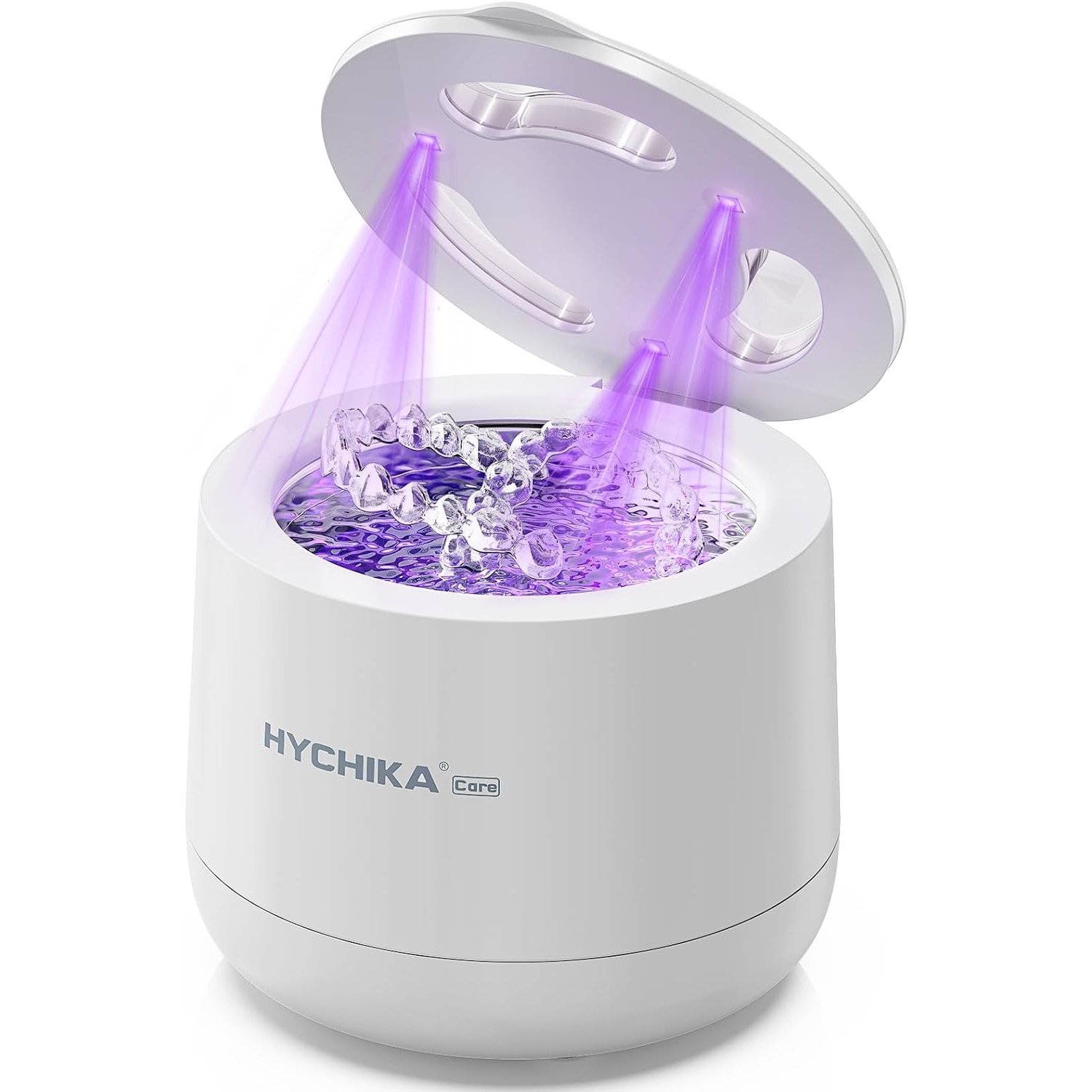
Used together, ultrasonic waves do the physical work of removing visible build-up while UV-C addresses what's left at a bacterial level. That's the logic behind the HYCHIKA's combined mode: a single 5-minute cycle that runs both technologies at once, rather than treating them as separate steps.
Choosing the right mode for the job
Daily maintenance rarely needs more than the standard combined cycle. Reach for the 15-minute deep mode when a retainer or aligner has picked up visible staining, when it's been a few days since the last clean, or as a weekly reset even with otherwise good habits. Adding a cleaning tablet to the tank during a deep cycle adds a chemical cleaning action that neither ultrasonic waves nor UV-C provide alone.
A realistic weekly routine
A simple, sustainable pattern: a 5-minute combined cycle each morning or evening as part of normal appliance care, and a 15-minute tablet-assisted deep clean once or twice a week. This keeps daily upkeep quick while still catching the build-up that a quick cycle alone would miss over time.
Keeping the cleaner itself in good condition
Rinse and dry the tank after each use, and avoid letting water sit in it between cycles — stainless steel resists corrosion well, but standing water and mineral deposits will still shorten a tank's clean, hygienic feel over time. An occasional water-only cycle helps clear any residue from hard water.